fred voisin
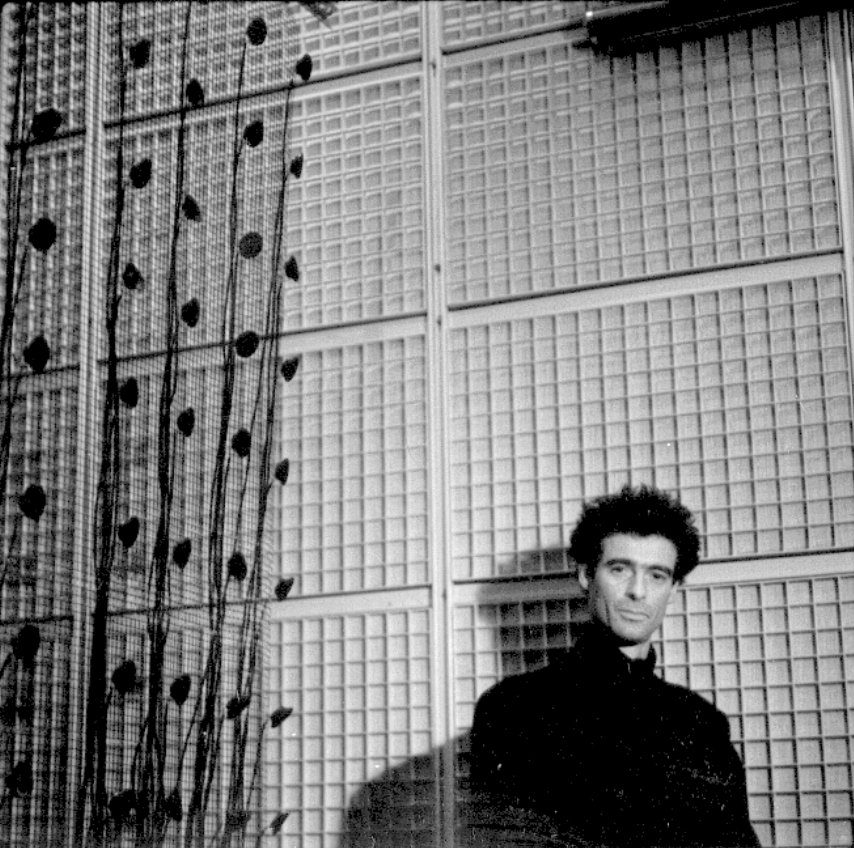
Fred Voisin is one of the pioneers of computer music. At the crossroads of artistic creation and scientific research, his career has led him to explore territories that few composers of his generation have ventured into, since the earliest days of computing applied to music.
Education and early research
After earning his Baccalauréat in Orsay in 1984, he began studying musicology at the Sorbonne – Paris IV, ethnolinguistics at Langues O' under Michèle Therrien, and met Jean Malaurie at the EHESS, where he trained in ethnomusicology and cognitive science. This dual culture, artistic and scientific, shaped the singularity of his approach from the outset.

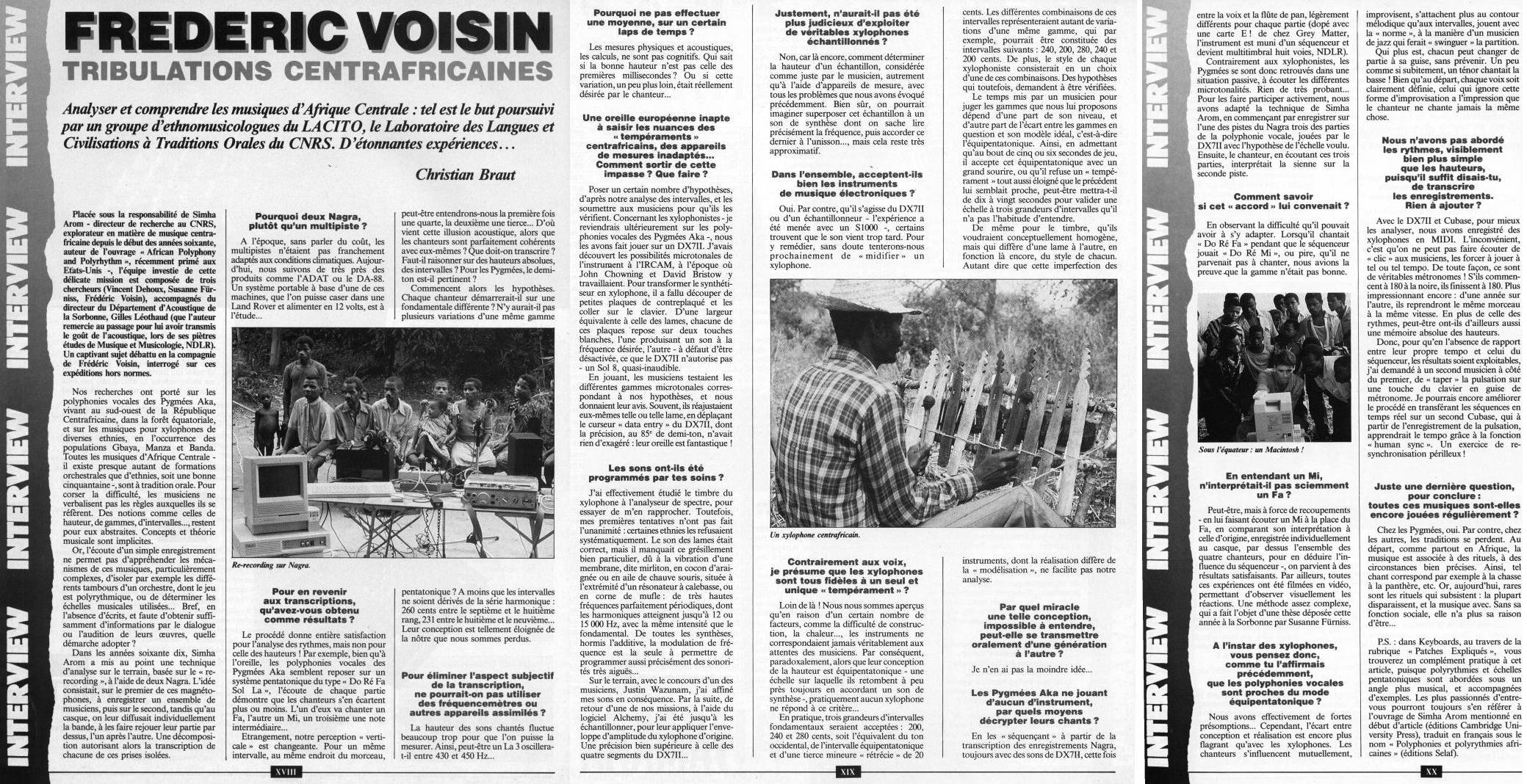
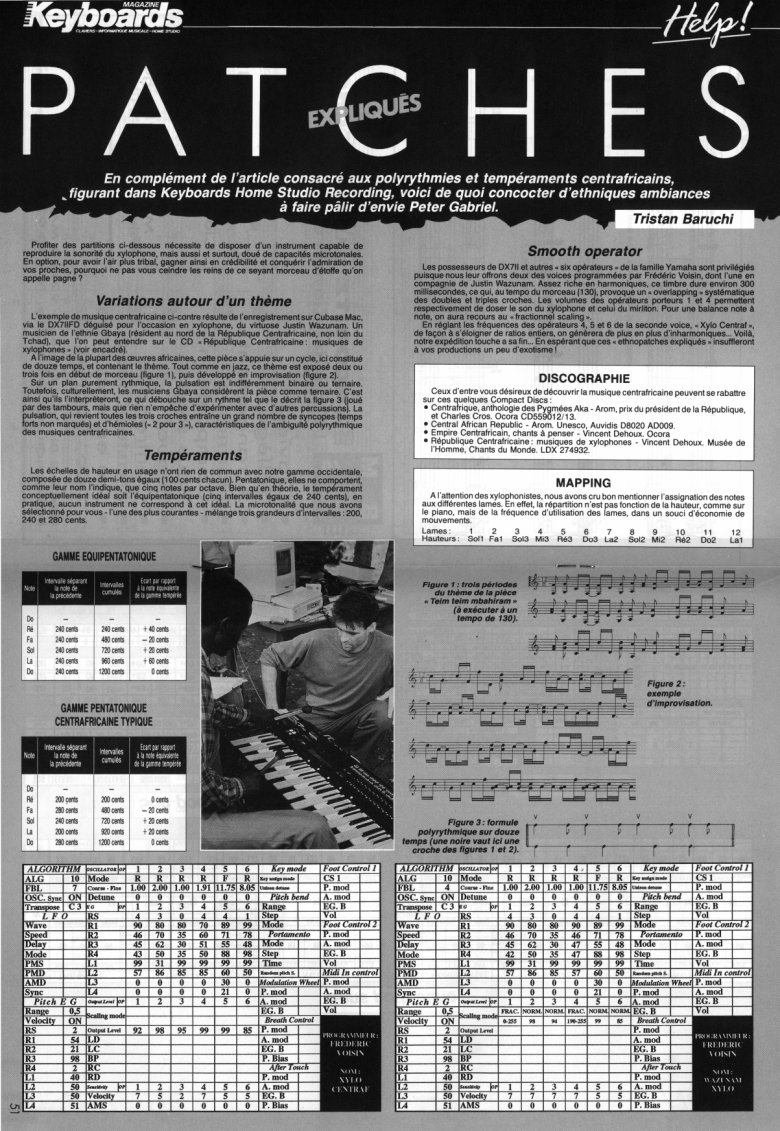
An associate researcher at LACITO-CNRS from 1989 under the direction of Simha Arom, then a Fondation Fyssen fellow from 1992 to 1994, he carried out several field missions in Central Africa and Indonesia. It was there that he designed his first experimental computer devices for the study of traditional music — tools that foreshadowed a career entirely devoted to inventing instruments for research and creation. This research was quickly published both in MIT's Leonardo Music Journal and in Keyboards Magazine®. It was also the occasion for decisive encounters with figures such as Gyorgy Ligeti, Geneviève Dournon, Tran Van Khe, Louis Dandrel, Marc Chemillier, Stephen McAdams, and Dan Sperber…
Ircam and the contemporary music scene
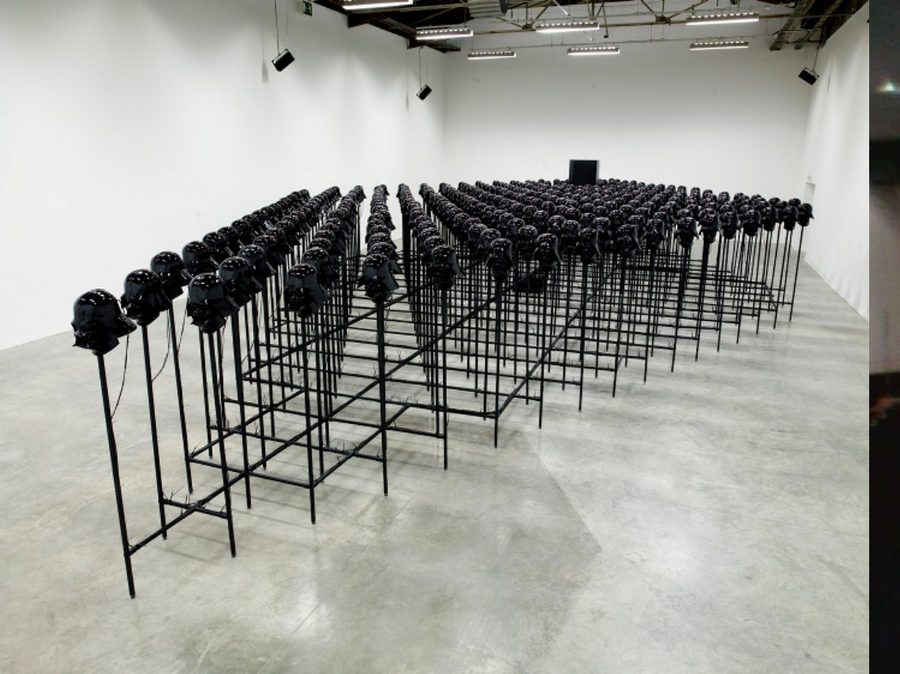
From 1995, composer Jean-Baptiste Barrière introduced him to Ircam – Centre Georges Pompidou, where he designed computer systems for musical creation, with Laurent Bayle and Gérard Assayag supporting his research. He also took part in numerous projects and concerts alongside Art Zoyd Studios (Maubeuge) and the Centre National de Création Musicale de Nice (CIRM), and worked with major figures of contemporary music and dance, notably: Daniel d'Adamo, Jean-Louis Agobet, Georges Aperghis, Maurice Benayoun, Allain Gaussin, Heiner Goebbels, Peter Greenaway, Myriam Gourfink, Gérard Hourbette, Atli Ingolfsson, Philippe Leroux, Martin Matalon, Emmanuel Nunes, Rachid Ouramdane, Horatiu Radulescu, Roger Reynolds, Terry Riley, Fausto Romitelli, Atau Tanaka, Giovanni Verrando, David Wessel and Iannis Xenakis, among others. His contribution has been recognized by a younger generation of composers, such as François Paris and Julien Vincenot, who each dedicated a work to him. His work at Ircam, notably around a device using 576 miniature loudspeakers by Robin Minard, was the subject of a profile by Pierre Gervasoni in Le Monde on 3 April 2002, titled « Frédéric Voisin et le chant des disques durs » (Frédéric Voisin and the Song of Hard Drives).
Musical research and generative artificial intelligence
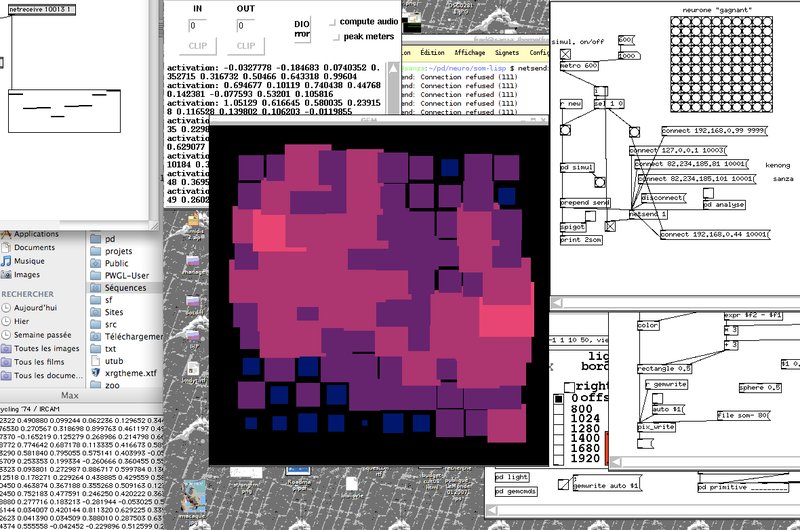
From 1999 to 2012, between concerts and master classes, he developed the Morphologie library for Ircam's OpenMusic environment, drawing on both his research in ethnomusicology and René Thom's work on mathematical morphology. He also designed, in collaboration with choreographer Myriam Gourfink, the generative tool LabanOnLisp for choreographic composition, used notably for L'Écarlate. It was questions of logic (formal, fuzzy, stochastic, etc.) that later led Fred to develop the Neuromuse project, a system of neuromimetic networks for musical creation. It was as head of musical research at CIRM that he further developed this project and met Robin Meier: together, they produced pioneering musical installations in generative artificial intelligence, including Caresses de marquises (Nuit Blanche 2004, Gare de l'Est, Paris, under the artistic direction of Nicolas Frize), a twelve-hour performance-concert for artificial neural networks, Symphonie des machines (4th Dimension Festival, Sophia Antipolis, 2006), and Last Manœuvres in the Dark (with Fabien Giraud and Raphaël Siboni, Palais de Tokyo, Paris, 2008). This research was also the occasion for other encounters, notably with François Pachet at the Sony Computer Science Lab. It now ranks among the early milestones of AI applied to sound creation.

Teaching and applied research
Since 2007, he has taught composition at the Conservatoire du Pays de Montbéliard, within the universities of Bourgogne, Saint-Étienne and Montbéliard, and led workshops in Paris, Nice, Milan, Venice and Taipei. At the same time, he worked as an engineer on several applied research projects on digital audio devices for cognitive rehabilitation, in collaboration with CNRS, ENSAM, the Université de Bourgogne and INSERM. This work led him, as an independent researcher, to design a device of virtual soundscapes, known as Madeleines sonores, intended for nursing-home residents with Alzheimer's disease, and to lead clinical studies — a direct and deeply human application of decades of research on sound, memory and cognition.
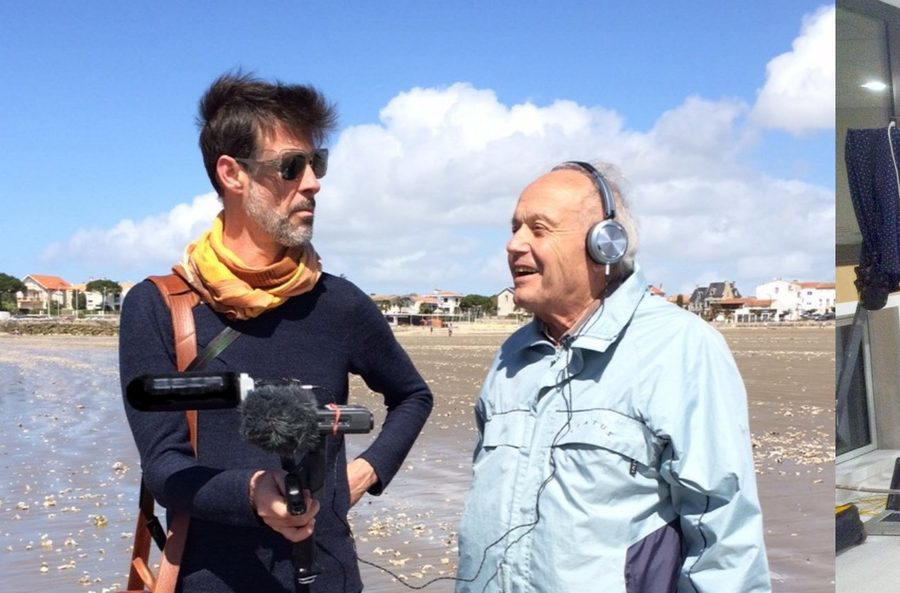
His research on generative processes also extends into public space, through permanent sound installations. This is the case with Fonocanal, a permanent sound installation on a bank of the Canal de Bourgogne, inaugurated near lock n°92 in 2021: it continuously broadcasts sounds generated in situ and in real time, drawn from the weather, the seasons, the time of day, stochastic processes, and sound archives from the Maison du Patrimoine Oral de Bourgogne.
A body of work at the crossroads of disciplines
From field ethnomusicology to generative artificial intelligence, by way of contemporary composition and applied medical research, Fred Voisin's career traces a rare trajectory: that of an artist-researcher for whom technology has never been an end in itself, but always an instrument in the service of understanding sound, memory and creation. This trajectory would later lead him, in Marseille in 2019 at the Symposium on Computer Music Multidisciplinary Research, to finally meet John Chowning, the founding figure of computer music to whom we owe FM sound synthesis — a technique in which, without knowing it at the time, he had taken his very first steps in electronic music.
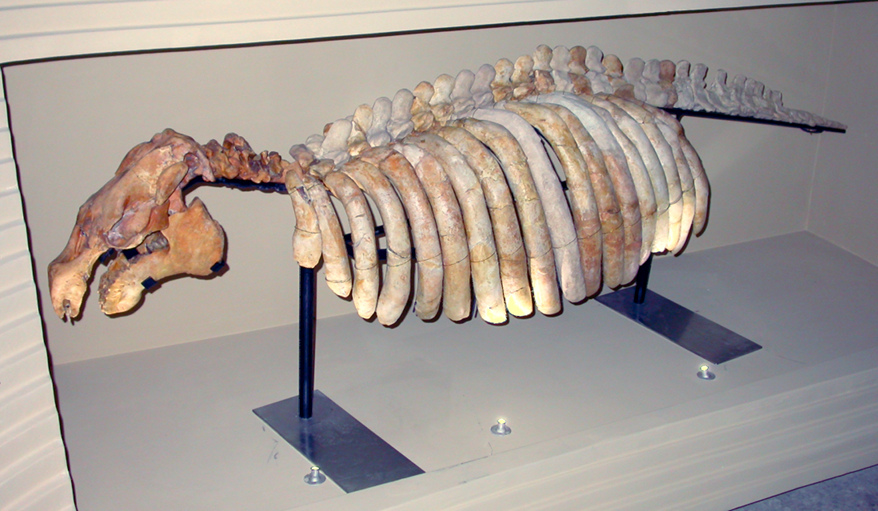
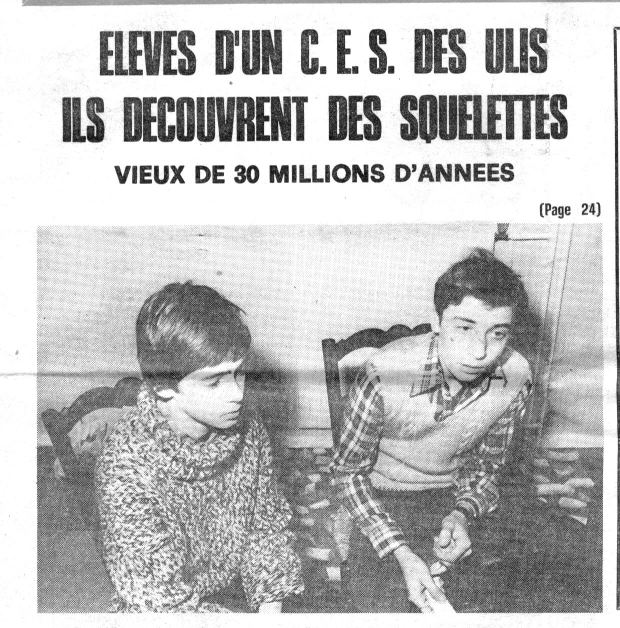
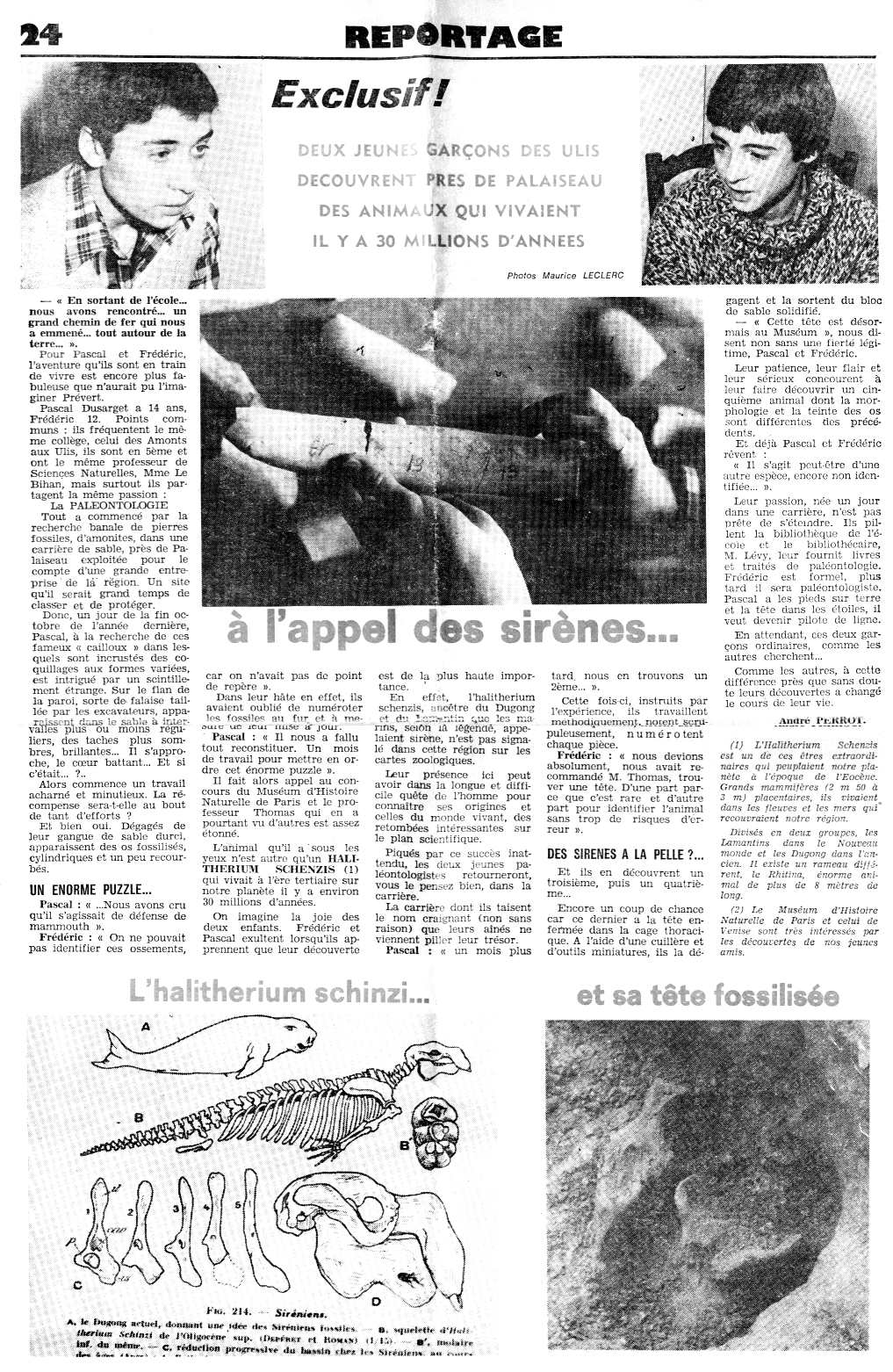
This curiosity extends well beyond the musical field alone: as a child, in a quarry wedged between two motorways south of Paris, he discovered with his friend Pascal Dusarget, around 1978, several fossil skeletons of Halitherium schinzi, a marine mammal ancestor of dugongs, manatees and other sirenians, aged 30 to 60 million years. This adventure led him to meet the paleontologist Herbert Thomas at the Muséum d'Histoire Naturelle de Paris, who encouraged them to donate a fifth, nearly complete skeleton to the Museo di Storia Naturale di Venezia, where it is now preserved and exhibited under the care of paleontologist Fabrizio Bizzarini and referenced on Google Arts & Culture.
Works
Works: concerts, co-productions, sound installations, performances, documentaries.
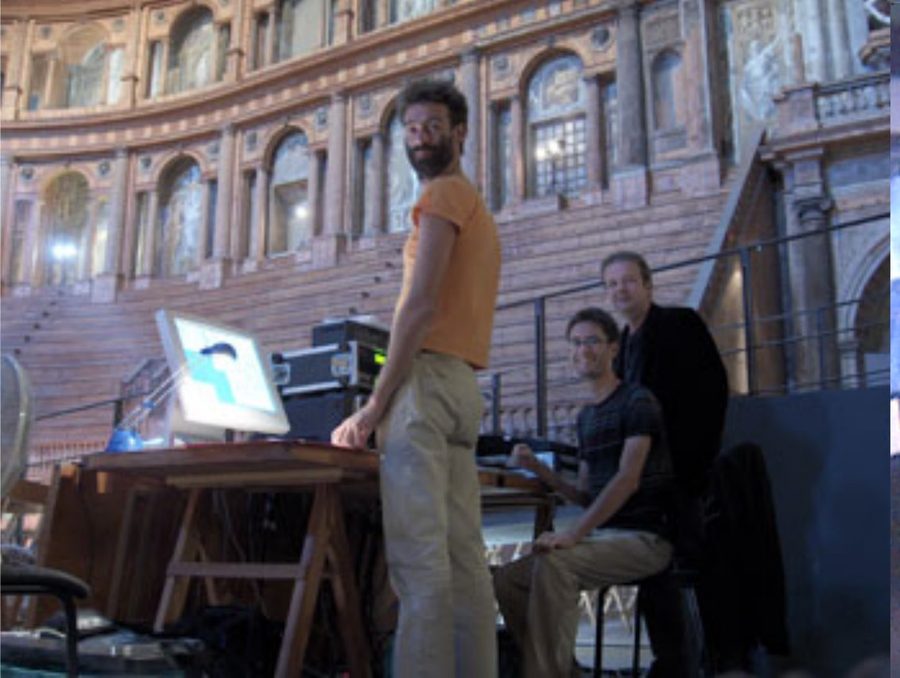
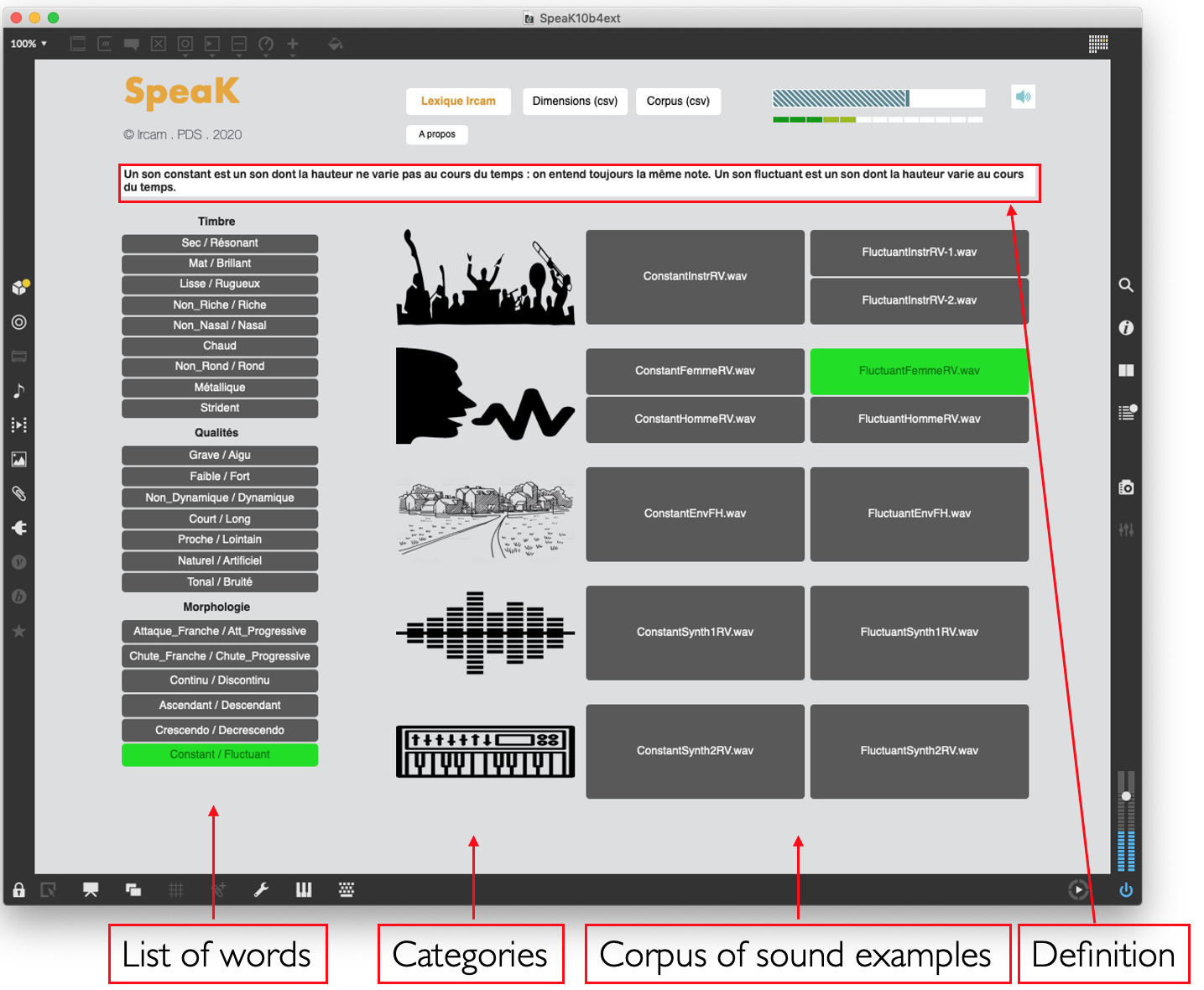
Tools & Software: tools for musical creation and sound design.
Publications
Bibliography compiled from HAL, ORCID (0000-0002-7879-5304), Google Scholar and Ircam.
Journal articles
- « Vocal Imitations of Non-Vocal Sounds » (with Guillaume Lemaitre, Olivier Houix, Nicolas Misdariis, Patrick Susini), PLOS ONE, 11(12), e0168167 (2016) — DOI
- « On Analytical vs. Schizophrenic Procedures for Computing Music » (with Robin Meier), Contemporary Music Review, 28(2), pp. 205-219 (2009) — DOI
- « Le statut des consonances naturelles : le point de vue d'un ethnomusicologue », European Society for the Cognitive Sciences of Music (1994) — PDF, HAL
- « Musical Scales in Central Africa and Java: Modeling by Synthesis », Leonardo Music Journal, 4 (1994) — DOI, HAL
- « An interactive experimental method for the determination of musical scales in oral cultures » (with Vincent Dehoux), Contemporary Music Review, 9(1-2), pp. 13-19 (1993) — DOI, HAL
- « La modélisation des systèmes d'accord des xylophones centrafricains », Analyse Musicale, 23, pp. 42-46 (1991) — PDF, HAL
Conference proceedings
- « Designing Virtual Soundscapes for Alzheimer's Disease Care », 14th International Symposium on Computer Music Multidisciplinary Research, Marseille (2019) — HAL
- « Comparing identification of vocal imitations and computational sketches », Meeting of the Acoustical Society of America, Honolulu (2016) — DOI, HAL
- « Combining gestures and vocalizations to imitate sounds », ASA Meeting & International Symposium on Gesture Studies, Jacksonville / Paris (2015-2016) — DOI, HAL
- « Dissemblance et espaces compositionnels », Journées d'Informatique Musicale, Saint-Étienne (2011) — HAL
- « Playing Live Music Using Artificial Neural Networks » — invited talk, NeuroArts Festival, University of Plymouth (11 February 2011) — archive.org
- « Ethnomusicologie et technologie numérique » — talk at the colloquium « Un passé plein d'avenir : à la rencontre du patrimoine musical » (Université de Saint-Quentin-en-Yvelines / UNESCO), Palais de la Découverte, Paris (4 April 2008)
- « Playing Integrated Music Knowledges with Artificial Neural Networks » (with Robin Meier), Journées d'Informatique Musicale / Sound and Music Computing, Paris (2004) — HAL
- « De l'Afrique à l'Indonésie : expérimentations interactives sur les échelles musicales » (with Simha Arom), 3rd International Conference for Music Perception and Cognition, Liège (1994) — HAL
- « Analytic Procedures with Scales in Central African Xylophone Music » (with Vincent Dehoux), 7th European Seminar in Ethnomusicology, Berlin (1990) — HAL
Books & chapters
- « Designing Soundscapes for Alzheimer's Disease Care, with Preliminary Clinical Observations » (with Arnaud Bidotti, France Mourey), in Perception, Representations, Image, Sound, Music, Springer (2021) — DOI, HAL
- « De la brousse dans les synthés », in Gilles Deleuze : la pensée-musique, CDMC (2015) — HAL
- « Composing the qualitative », in The OM Composer's Book, Editions Delatour (2006) — HAL
- « Theory and Technology in African Music » (with Simha Arom), in The Garland Encyclopedia of World Music: Africa (1998) — HAL
- « Experimental Ethnomusicology: An Interactive Approach to the Study of Musical Scales » (with Simha Arom, Gilles Léothaud), in Perception and Cognition of Music, Psychology Press (1997) — HAL
- Ndroje Balendro. Musiques, terrains et disciplines. Textes offerts à Simha Arom — collective volume (with Vincent Dehoux, Susanne Fürniss, Sylvie Le Bomin, Emmanuelle Olivier, Hervé Rivière), Peeters-SELAF (1995) — HAL
- « Echelles musicales et données linguistiques : vers une histoire des sociétés oubanguiennes » (with France Cloarec-Heiss), in Ndroje Balendro, Peeters-SELAF (1995) — HAL
Research reports
- « L'accord des xylophones Gbaya et Manza de Centrafrique », research report, École des Hautes Études en Sciences Sociales (1993) — PDF, HAL
Other documents
- Morphologie — documentation (1999) — PDF, github.com/openmusic-project/Morphologie
- LabanOnLisp (LOL) — Écarts, documentation — page, PDF
- Neuromuse — neuromimetic network system for musical creation (code repository) — github.com/FredVoisin/neuromuse
Press
- 2024 — Broadcast « Les voix du canal », interview, France 3 Bourgogne - France TV
- 2022 — « De l'intérêt du design sonore en Ehpad », Santé Mentale, 23 June 2022
- 2021 — « Installation d'un Phonocanal à l'écluse de Saint-Martin-sur-Armançon : de quoi s'agit-il ? », L'Yonne républicaine
- 2021 — « L'éclusophone, le Fonocanal et les points d'ouïe à découvrir cet été le long du canal de Bourgogne », L'Yonne républicaine
- 2021 — « La classe ULIS de Pasteur fait chanter le canal », Communauté de Communes Le Tonnerrois en Bourgogne — about Fonocanal (archive)
- 2019 — « Alzheimer – Les Madeleines Sonores de Fred Voisin », Plan Sonore, 2019
- 2016 — « Peut-on confondre la production musicale de la machine avec celle de l'homme ? », Le Monde, « Les clés de demain » supplement, November 2016 (in French)
- 2002 — « Frédéric Voisin et le chant des disques durs », portrait by Pierre Gervasoni, Le Monde, 3 April 2002
- 2001 — « Myriam Gourfink ou le mariage subtil de la danse et de l'informatique », by Fabienne Arvers, Les Inrockuptibles, 12 February 2001 (in French) — summary
- 1993 — « Tribulations centrafricaines : entretien avec Christian Braut » (scan) & « Patches expliqués : programmes et microtuning centrafricains du synthétiseur Yamaha DX7 » (scan), Keyboards Magazine n°69, Home Studio Recording supplement, Sept. 1993
- 1979 — « Élèves d'un C.E.S des Ulis, ils découvrent des squelettes vieux de 30 millions d'années » (scan), La Marseillaise de l'Essonne, front page, 28 March 1979; « À l'appel des sirènes... », report by André Perrot (scan), p. 24 — Google Arts & Culture